The Sacrament of the Present Moment (Part II): Why the Dance Works—And When It Doesn’t
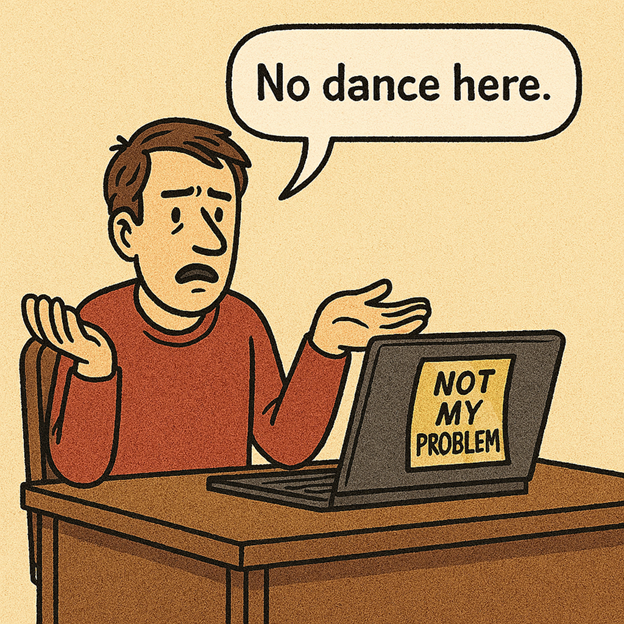
Lately I’ve been thinking about why certain moments open themselves to grace so cleanly, while others—despite good intentions—seem to unravel or blow up in strange ways.
Here’s the observation that’s been sharpening the picture for me.
The moment worked because it was entirely within my domain:
· it was my email
· on my computer
· containing my intellectual property
· in my home
· with potential impact on my customers
Taken together, that meant something very simple but very important:
I was the one who had to act.
Not because I wanted to.
Not because I felt heroic.
But because responsibility, authority, and obligation were all aligned. The moment belonged to me. And because it did, grace could meet me inside it rather than around it.
That’s where the “dance” becomes real.
What I also realize is this:
The dance only works when we stay within our actual jurisdiction.
If even one of those elements had belonged to someone else—
someone else’s email, someone else’s data, someone else’s home, someone else’s customers—then stepping in would not have been cooperation with grace. It would have been usurpation.
And that’s where things quietly go sideways.
When we take responsibility that isn’t ours, even with the best intentions:
· action becomes controlling instead of responsive
· urgency replaces clarity
· outcomes detach from intentions
· and grace, rather than flowing, feels oddly resisted
The moment stops being a dance and turns into something like a farce. Lots of motion, very little harmony. And when it collapses, we’re often left wondering why—because after all, our intentions were good.
But grace doesn’t cooperate with good intentions alone.
It cooperates with right order.
The sacrament of the present moment doesn’t require perfection or insight in advance. It requires something quieter and harder: knowing where your responsibility begins—and ends—and staying there faithfully.
When responsibility is rightly held, grace shows up naturally.
When it’s claimed where it doesn’t belong, even sincerity can implode.
This distinction has become one of the clearest ways I can tell whether I’m participating in the moment—or trying to manage it.
And when it does work—when action, humility, authority, and trust line up—the recognition always comes afterward, never before:
It is the Lord.
Still is.